Friday, September 22, 2023

Stretch it out!


Stretch It Out


 Although Jason Kravitz's quote “Be infinitely flexible and constantly amazed” probably refers to our mental focus, flexibility is vital to our physical health as well.  

Our bodies were designed to be walking, bending, reaching and stretching and it's amazing as you grow older how stiff you can get when on a long road trip or even sitting through a long movie. 

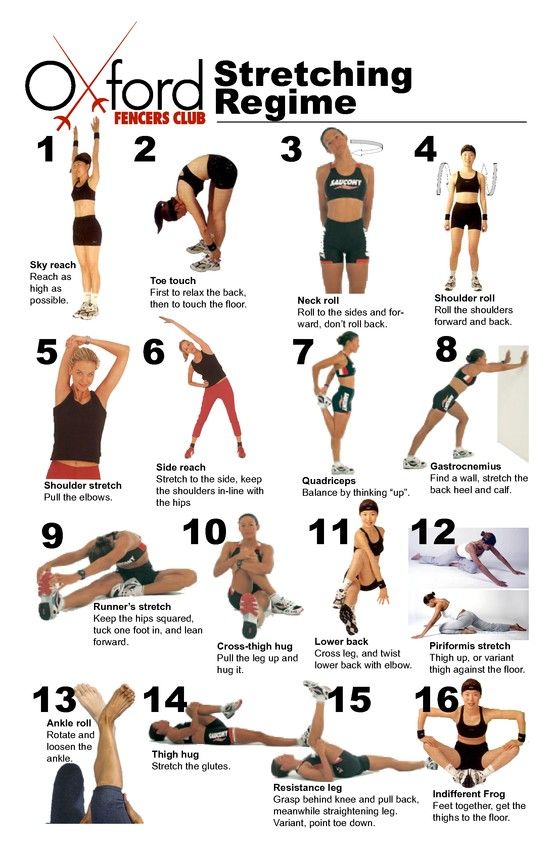
I know you have just re-started completing your daily exercise hour but this week I would also like you to stretch for at least 10 minutes per day. You can include this as part of your daily exercise minutes or do it in addition to your minutes but begin to include daily stretching in your physical routine. For every day that you stretch at least 10 minutes you can claim 5 bonus points. And yes you can stretch on Sunday too (think spiritual thoughts!) - for a total of 35 possible bonus points.

If you have been inactive for any length of time, chances are you have lost a percentage of the range of motion associated with your joints. This range of motion is commonly referred to as flexibility.

How We Lose Flexibility

As we age, flexibility diminishes within the joints through lack of stretching and physical activity. . 

Benefits

Stretching is a physical activity that elongates connective tissues, muscles and other tissues. The benefits associated with stretching include:

Reducing muscle tension and relaxing the body

Improved coordination and freer movement of body and limbs

Increased range of motion in the associated joints

Prepare the body for physical activity

Preventing injuries from tight muscles during physical activity

Creating a mind body connection

Promoting circulation

Reduce the risk of back problems

Reduce muscle soreness after exercise

Ten tips on how to stretch

1. Do everything slowly.

2. Hold the stretch for at least 10 seconds prior to exercise (warm-up) and for at least 30 seconds post exercise (cool-down).

3. Breathe normally and relax while holding the stretch to the point of pain.

4. NEVER, EVER do any bouncy stretching, always hold and relax.

5. Focus on the muscle you are trying to stretch and then try to lengthen it.

6. If a particular muscle group is tight, then stretch it in stages. Stretch as far as you can, then relax it and stretch again. This is most important during cool-down.

7. Move slowly out of the stretch.

8. Remember to stretch both sides of the body.

9. Increasing the range of movement around a joint will help the blood flow to the muscles surrounding the joint and increase circulation that will carry away any lactic acids that may build up in the muscle.

10. Do more stretching in addition to just warming-up and cooling-down. As we get older our muscles shorten naturally, and it is vital for everyone that stretching becomes part of your normal everyday life. Gyms that offer stretch-classes or Yoga, where the aim is to permanently and progressively increase your flexibility are well worth considering if time and money allows.

And just a heads up- next week's challenge will feature eating fresh, local, in-season produce. It would be wonderful if you have the opportunity to attend a farmer's market or local produce stand so pencil that into your schedule if possible. 


Tuesday, September 19, 2023

Let's Get Geared Up!


SUNDAY, JANUARY 9, 2022

Let's Get Geared Up! 


As summer winds down and school begins again, we are naturally led to thoughts of goal setting and fresh starts. You may have found that over the fun and busyness of summer you lost focus on care-taking your personal health.  It's time to make yourself a priority again. Good health habits can increase your energy, lead to clear thinking and enhance your ability to better accomplish other goals you have set for yourself this year.


So as we begin together again let’s spend this first week preparing and focusing on what we will accomplish together. To earn our weekly bonus points for the week (5 points per day for a total of 35 points) you need to:


  1. If you have not already done so join myfitnesspal.com and begin journaling your daily food and water intake and exercise. This is a tool I hope you will continue to use long after we have completed this competition. 


  1. Contact your partner and communicate about how you will support and help each other through this competition. If you live nearby you might want to exercise together. You can encourage each other with texts, e-mails and phone calls. You can review each other’s food journals and share recipes and ideas. Make a plan of what you will do to aid one another in prioritizing your health habits. 


  1. Print up and use the daily sheet (I’ve e-mailed it to you)  if you need it to keep track of your efforts (you won't be turning in this sheet but may use it to keep track for when you do report on our google spread sheet)

4. Stock Your Kitchen with Healthy Foods

A first step in eating right is getting prepared. Go through your fridge and pantry and toss the super-unhealthy stuff you want to eat less of. Then, get ready to cook up healthy meals by stocking your pantry with fresh healthy-cooking essentials.


5. Hide Tempting Foods

One study found that keeping unhealthy food hidden can help you eat less of it: when secretaries were given candies in clear dishes to place on their desktops, they helped themselves to candy 71 percent more often than a similar group that was given the same candy in opaque dishes so that the candy wasn't visible. At home, stash tempting treats inside a cabinet where you can't see them-or better yet, get rid of them altogether and keep the apples-and other healthy eats-out on the counter. 


6. Plan Your Exercise and get equipped

If you wait for the mood to strike or for a lull in your day, you might not get in an optimal amount of exercise so make a plan ahead of time. If you like to exercise at the gym renew your membership if needed and check the schedule of classes. Plan now for what ones you plan to attend. If you prefer to exercise out of the gym start thinking about what is available as far as biking, running, skating etc. Begin to formulate your plan,


7. Spiff up your equipment Do you have what you need? A good water bottle that has markings to track your intake, measuring spoons and cups and a good food scale, exercise bands, good quality walking/running shoes (Did you know athletic shoes are only made to last 350-500 miles? They often still LOOK great but the cushioning is shot and they are no longer safeguarding your feet and joints) swim goggles that don’t leak, work out bands, floor pad etc. I’m not going to REQUIRE you to purchase anything but good equipment can inspire effective work outs so take an inventory of what you might need.  One of my favorite tools is my personal scale that measures not only weight but percentage of body fat. 


8. Weigh yourself and take your measurements. We track just waist and hips measurements for this competition but you might want to take them all just to help track progress. Note: You don't turn these into anyone. Just jot them down and keep them in a safe place. 


9. Read or re-read the RULES and FAQ's tabs on this blog just to make sure you remember all the tools to help you in prioritizing your health. 


OK ladies let’s get geared up. You can earn your 35 weekly bonus points this week by looking at the list above and taking care of what you need to be totally focused on 8 weeks of healthy living 


Sunday, October 30, 2022

So what is your plan for the rest of the year?


It can be so discouraging that good habits take focus, effort, sweat and toil to forge. And it seems you can fall out of them with ease. An injury, sickness, vacation or any other disruption can cause you to lose all of the progress you have made and completely fall out of your good habits. 


And so here we are nearing the end of another healthy living competition. You have worked so hard and hopefully you have seen some progress in energy levels, mental health, weight loss and an overall feeling of accomplishment. 


I am hoping that even if you aren’t one of our top point earners you have at least forged some healthy habits that are blessing your life.


There is a saying I like that goes “If you do what you did you will get what you got.” In other words if you continue with these healthy habits you will continue to enjoy increasing benefits to your overall health. But if you consider the competition completed and go back to your old habits you will reap what you did when you fell into those habits before.


So for the last challenge of this 8 weeks of competition I would like you to consider some of the healthy challenges you have experienced during this or previous rounds of competition. You can find all of the past weekly challenges on the blog. Here are 25 healthy habits (most are past bonus challenges)  that you might want to consider continuing:

  1. Eat at least 5 servings of fruits and vegetables daily.
  2. Exercise daily
  3. Use myfitnesspal.com to record your daily food and exercise as you learn portion and weight control. 
  4. Limit how many days per week you eat sweets
  5. Drink plenty of water daily.
  6. Dance daily for mental and physical benefit.
  7. Eat local, seasonally fresh produce
  8. Use cold showers and saunas to benefit your health
  9. Use myfitnesspal to track your fiber, protein or other important nutrients
  10. Follow healthy influencers on social media, read their blogs and booksGet sunshine daily 
  11. Learn healthy habits to help you sleep deeply each night 
  12. Get regular medical and dental check ups as well as the tests designated for your age (mammogram, colonoscopy etc.)
  13. Learn meditation techniques and make it part of your daily practice
  14. Make sure your work outs include stretching, strength training and aerobics.
  15. Learn what the ideal body weight is for your height and frame and work toward getting to that weight and maintaining it,
  16. Eat the rainbow
  17. Work on your posture
  18. Enjoy fermented foods regularly.
  19. Make sure you are getting adequate Vitamin D
  20. Cultivate some stress relieving habits when you need to self soothe (rather than sugar or overeating)
  21. Experiment with time restricted eating
  22. Eat mindfully and slowly. Chew your food well.
  23. Eat a variety of food and vegetables each week. Try to get in 30 different ones.
  24. Do a plank challenge 
  25. Give up artificial sweeteners 


There are many others on my blog site. 


So our last weekly challenge is this. Read over these 25 weekly bonus challenges, think about what habits you feel have really benefited you and make a detailed plan of how you want to handle your health for the rest of 2022. Then write me an e-mail (MomSandee@aol.com) and tell me your plan. When I get that e-mail you have earned your final 35 weekly bonus points.


Sunday, October 23, 2022


16 Creative Ways to Eat More Vegetables


My husband and I enjoyed a 3 week vacation in Croatia this summer. For the first part we were traveling on a small yacht with 20 couples. The boat had a great chef and it was wonderful to enjoy the local, fresh foods. I can admit that the Cuddle Fish (like a squid with creepy suckers) Risotto cooked in it’s own ink (yes, it was black) was an eating adventure but not my new favorite food. But I do love trying new things while traveling. Daily breakfast included fresh made croissants, pancakes, eggs, bacon, sausage, yogurt and fresh cucumbers and tomatoes. I have never eaten cucumbers or tomatoes for breakfast but I enjoyed it every day while traveling. And I realized “WHY DON’T WE ROUTINELY EAT VEGETABLES AT BREAKFAST?” (I realize tomatoes aren’t really vegetables but I count them as veggies). 

This week I was listening to a podcast with Chris Wark (author of Chris Beats Cancer) who is now a 20 year survivor of stage 3 colon cancer. His regimen upon diagnosis was to eat only raw fresh fruits and vegetables-15-20 servings a day. We only “require” 5 servings per day for this competition but many experts say you should be shooting for at least 12 servings. 

Including vegetables in your meals is extremely important. Veggies are rich in nutrients and antioxidants, which boost your health and help fight off disease.

Additionally, they’re beneficial for weight management  due to their low calorie content.

Health authorities around the world recommend that adults consume several servings of vegetables each day, but this can be difficult for some people.

Some find it inconvenient to eat vegetables, while others are simply unsure how to prepare them in an appetizing way and fit them into a daily deal plan. (The national average is 1-2 servings per day)

Let's look at some unique ways you can incorporate vegetables into your eating plan, so that you never get sick of eating them.

Brianna Elliott RD from Healthline shares the following suggestions:

1. Make veggie-based soups

Soups are an excellent way to consume multiple servings of vegetables at once.

You can make veggies the “base” by pureeing them and adding spices.

Furthermore, it’s simple to cook veggies into broth- or cream-based soups.

Adding even a small number of extra veggies, such as broccoli, to soups is a great way to increase your intake of fiber, vitamins, and minerals.

2. Experiment with veggie noodles

Veggie noodles are easy to make, and a great way to get more veggies in your eating plan. They’re also an excellent low carb substitute for high carb foods, such as pasta.

They’re made by inserting vegetables into a spiralizer, which processes them into noodle-like shapes. You can also:

  • shred them
  • slice them with a mandoline
  • just cut them up as you please

You can use a spiralizer for almost any type of vegetable. They’re commonly used for zucchini, carrots, spaghetti squash, and sweet potatoes, all of which come packed with extra nutrients.

Once the “noodles” are made, they can be consumed just like pasta and combined with sauces, other vegetables, or meat.

Besides spiralized vegetables I love spaghetti squash itself being used in place of pasta. I just pierce the skin and throw the whole thing in the oven for an hour at 350 degrees. 


3. Add veggies to sauces

Adding extra vegetables to your sauces and dressings is a sneaky way to increase your veggie intake, especially if you have picky kids.

While you’re cooking sauces, such as marinara sauce, simply add some veggies and herbs of your choice to the mix, such as chopped onions, carrots, bell peppers, and leafy greens like spinach.

Pureeing roasted root vegetables can make for rich sauces with an Alfredo-like feel. Think carrots, sweet potatoes, squash, turnips, purple yam, beets, and kohlrabi.  


4. Enjoy cauliflowers new faces

Cauliflower is extremely versatile. You can rice it, roast it, stick it in a stew, puree it for silky goodness, and make it into a pizza crust.

I especially enjoy the frozen cauliflower rice from Trader Joe’s with Indian sauces.


5. Blend into smoothies

Smoothies make for a refreshing breakfast or snack. Green smoothies in particular are very popular for hiding loads of leafy greens in fruity packages.

Typically, they’re made by combining fruit with ice, milk, or water in a blender. However, you can also add veggies to smoothies without compromising the flavor.

I love the power greens (spinach, kale, chard) from Costco and I freeze the entire bag as soon as I get it home. 

Just 1 loosely packed cup (25 grams) of spinach contains more than a full day’s recommended amount of vitamin K and half of the recommended amount of vitamin A.

In addition, frozen zucchini, pumpkin, beets, avocado, and sweet potatoes work well blended into smoothies. 

6. Add veggies to casseroles

Including extra veggies in casseroles is an efficient way to increase your veggie intake. They add bulk, texture, and taste all at once.

Casseroles often combine meats with vegetables, cheese, potatoes, and a grain, such as rice or pasta. As you might expect, traditional casseroles are typically very high in refined carbs and calories.

They’re especially common around the holidays when vegetables may be less popular than other dishes.

Luckily, you can reduce calories and carbs in your casseroles by replacing the grains with veggies, such as broccoli, mushrooms, celery, or carrots.

7. Cook a veggie omelet

Omelets are an easy and versatile way to add veggies into your meal plan. The eggs add lots of good nutrients too.

Cook up some beaten eggs with a small amount of butter or oil in a pan, and then fold them around a filling that often includes cheese, meat, vegetables, or a combination of the three.

Any type of veggie tastes great in omelets and you can really load them up for lots of nutrition. Spinach, onions, scallions, bok choy, mushrooms, bell peppers, and tomatoes are common additions. Here are some to try:

8. Prepare savory oatmeal

Oats don’t have to be sweet. Savory oatmeal can add more veggies into your morning.

While it’s great with fresh fruit, raisins, or cinnamon, you can also add in eggs, spices, and lots of veggies.

9. Try a lettuce wrap or veggie bun

Using lettuce as a wrap or certain veggies as buns in place of tortillas and bread is an easy way to eat more veggies.

Lettuce wraps can be a part of several types of dishes and are often used to make low carb sandwiches and bunless burgers.

Additionally, many types of veggies, such as portobello mushroom caps, sliced sweet potatoes, halved red or yellow peppers, tomato halves, and sliced eggplant make excellent buns.

Lettuce wraps and veggie buns are an easy way to reduce your calorie intake, as one lettuce leaf contains only one calorie.

10. Grill veggie kebabs

Veggie kebabs pack lots of flavor onto a party-ready stick.

To make them, place chopped vegetables of your choice on a skewer and cook on a grill or barbecue.

Bell peppers, onions, mushrooms, zucchini, and tomatoes work well for kebabs.

11. Swap to a veggie burger

Veggie burgers are an easy swap for heavier meat burgers and can be topped with even more vegetables.

Veggie burger patties can be made by combining vegetables with eggs, nuts or nut flours, and seasonings. Sweet potatoes and black beans are also commonly used to make veggie burgers.

Note that not all meat-free burgers are full of veggies. Watch the labels to find some that have veggies as their main ingredients.  

You can take these recipes a step further by wrapping your veggie burger in a lettuce wrap, instead of a bun.

12. Add veggies to tuna salad

In general, tuna (or chicken or salmon) salad is made by blending tuna with mayonnaise (I replace this with plain greek yogurt) but any type of chopped vegetable can be added to increase the flavor and nutrient content.

Onions, carrots, cucumber, spinach, and herbs are common additions. But you can also add cucumbers, grape tomatoes, olives, red peppers, artichokes, shallots, and parsley.


13. Stuff some bell peppers

Stuffed bell peppers are made by stuffing halved bell peppers with cooked meat, beans, rice, and seasonings, and then baking them in the oven.

If you like them raw and crisp, you can add in layers of cream cheese, sliced chicken or turkey, and seasonings for a cold dish.

Bell peppers are a rich source of many vitamins and minerals, especially vitamins A and C 

You can increase the nutrition content of stuffed bell peppers by including even more extra veggies. Add in some onions, spinach, or riced cauliflower.

14. Add veggies to guacamole

Guacamole is an avocado-based dip made by mashing ripe avocados and sea salt together with lemon or lime juice, garlic, and additional seasonings. But you don’t have to stop there.

A variety of vegetables taste great when incorporated into guacamole. Bell peppers, tomatoes, garlic, and onions are good options. Plus, guacamole makes a delicious topper to salads and baked sweet or white potatoes.

15. Blend veggies with meatloaf

Meatloaf can also be a vehicle for more vegetables. It’s usually made with a combination of ground meat and other ingredients, such as eggs, breadcrumbs, and tomato sauce. It’s then molded into the shape of a loaf, which is where it gets its name.

You can add just about any type of chopped vegetable to meatloaf, including onions, bell peppers, carrots, zucchini, and greens like spinach.

Additionally, you can make “meatloaf” that’s completely veggie-based, including chickpeas, carrots, onions, and celery. The chickpeas will replace the meat and still feel  hearty.

16. Dinner for Breakfast 

When my youngest son was in high school he had an early morning religious class he attended (began 6 am) . He was happy to eat anything for breakfast so a veggie casserole, leftover vegetable soup etc. began his day right. 

The bottom line

There are so many ways to add vegetables to everyday food items. Some can sneak right into recipes without a lot of drama (like spinach) and some add color and flavor in ways you’d never expect (like beets and sweet potatoes).

Adding to a dish is great, but sometimes veggies can become the star.

Tip: If you don’t like a certain vegetable that you’ve only tried boiled, give another preparation method a try. So many people who hate boiled Brussels sprouts end up loving roasted or sautéed sprouts.  

By making veggies a regular part of your eating habits, you’ll significantly increase your intake of fiber, nutrients, and antioxidants.

I wish I could challenge you all to eat 15-20 servings of vegetables a day but instead lets begin here. FOR EVERY DAY YOU EAT AT LEAST ONE SERVING OF VEGETABLES AT EVERY MEAL YOU CAN CLAIM THE 5 POINTS TOWARD OUR WEEKLY BONUS POINTS. 
Sunday, October 16, 2022

Dance, Dance, Dance!


Woah! We just survived 3 delightful days of babysitting little grand kids. Sure leaves you wondering how you ever handled this kind of joy on a daily basis. It was EXHAUSTING. 

Besides bike rides, long walks, trampoline time, and pushing and pushing and pushing swings we had some fun dancing as well. And yes dancing is exercise. 

Here are some research-backed ways dancing can improve your health as shared in Everyday health

1. Dance Boosts Cardiovascular Health

Like other aerobic exercise, dancing is great for improving cardiovascular function. A study published in 2016 in the American Journal of Preventive Medicine found that people who engaged in moderate-intensity dancing (defined in the study as enough to make you out of breath or sweaty) were 46 percent less likely to develop heart disease or die from it than nondancers over 10 years of follow-up. The study also notes the social aspect of dancing, and the relaxation that comes with it (more on this below), could be partly responsible for its health benefits.


2. Dancing Builds Core Strength

Dance requires balance and helps build core strength, which helps promote good posture and prevent muscle injuries and back pain, according to Mayo Clinic.

Granger adds that this is particularly true for ballet. “In ballet, you train your body to stand still, often on one leg. This helps you train the deep muscles in your body, which you would not work otherwise,” she says. You are also engaging your abs, “which are an essential part to balancing,” she notes.

3. Dance Promotes Flexibility

In addition to building strength, many forms of dance stretch the limbs of the body, which improves flexibility, says Elizabeth C Gardner, MD, an orthopedic sports medicine surgeon at Yale Medicine and associate professor at Yale School of Medicine in New Haven, Connecticut. “Both of these (improved strength and flexibility) contribute to improved balance, which can help to avoid falls and reduce the risk of injury in other aspects of life,” she explains.


This is especially true for ballet dancers. “Ballet training involves a great deal of flexibility training. Flexibility means improved mobility, which means that any type of daily activity will be more enjoyable, whether you take yoga or you are trying to reach for the top cabinet in your kitchen,” says Granger.

4. Dance Can Help With Weight Loss

Dancing is also a form of both aerobic and anaerobic exercise, which is a great calorie burner, Dr. Gardner says. “Jumping and twirling movements are great aerobic training, while holding positions of squatting and balance positions can turn on the anaerobic energy system,” she explains.

In general, the more up-tempo the dance style, the more calories and energy will be burned.

Depending on the style of dance and your bodyweight, 30 minutes of dancing can burn between 90 and 252 calories, according to Harvard Medical School. This type of high-intensity calorie burning can help support weight loss if you’re trying to shed pounds. If you want to maximize calorie burn, Granger suggests taking a dance cardio class, designed to blast calories and improve physical fitness. 

5. Dancing Is Good for Bone Health

“As a form of weight-bearing activity, unlike a stationary bike or swimming, dancing can help to maintain bone density,” says Gardner. Per the National Osteoporosis Foundation, high-impact and weight-bearing exercises, including some forms of dance, help you effectively maintain and even build new bone mass.

Some research suggests for older adults with osteoporosis, dancing can help reverse some of the damage of that chronic condition. Other research in children suggests that those who took ballet had better bone mineral content after a three-year period compared with children who didn’t do ballet.

6. Dancing May Help Prevent Memory Loss

Dance often requires learning moves and routines (choreography).

“There’s actually some very good evidence that social dancing can reduce the risk of cognitive decline as we get older,” says Carolyn Fredericks, MD, a neurologist at Yale Medicine, citing a study published in the New England Journal of Medicine involving 469 people over the age of 75. Out of all the physical activities, including walking, bicycling, stair climbing, swimming, and group exercise classes, dancing was the only activity associated with a lower risk of dementia.

“We always recommend that older adults seek out cardiovascular exercise and social engagement, and cognitive challenge — social dancing gets all three of these,” Dr. Fredericks says.

7. Dance Is Good for Mental Health

Research shows that dance can help decrease anxiety, increase self-esteem, and improve psychological well-being.

And certain types of dance have even been used as treatment for depression. Research published in 2019 in Frontiers in Psychology found that dance movement therapy promotes emotional, social, cognitive, and physical integration of the individual, for the purpose of improving health and well-being — was effective in treating depression.

8. Dance Can Help Bust Stress

If you’ve had a tough day, have you ever cranked up your favorite tunes and busted a move to blow off some steam? Any type of movement can help bust stress, according to Mayo Clinic but dance may be particularly good for doing this.

9. Dance Can Help Us Feel More Socially Connected

Social connectedness and interaction is a really important part of mental and physical health. Much research shows that feeling lonely or socially isolated can have myriad negative health effects.  

“Dancing is sharing, and when you take class surrounded by other people, you know you all have something in common. You are not here to compete, you are here to enjoy, and there is an amazing feeling that comes with that,” Granger says. “Go take a class, and feel the energy of the room.”


Ideally I would love it if you would take a dance class at the gym or a studio for our challenge this week. But I realize some of you don’t have gym memberships. So to earn your 5 points a day toward our 35 weekly challenge points you need to dance for at least 3 songs each day this week. You can learn some new moves on YouTube or just make them up as you go along.  And yes you can dance on the Sabbath- find some music that feels worshipful to you and add some appropriate movements. Dance Dance Dance! 


Sunday, October 9, 2022

Seasonal and Local is Best


For the last several Sundays in our neighborhood a table has been set up in front of a neighbor’s home, offering dozens of varieties of fresh tomatoes, cucumbers and peppers for free! I love that as the weather changes so does the fresh produce that is available. Each season offers a variety of beautiful fresh produce and this is a great time to start experimenting and trying new recipes or reworking those old ones to incorporate more seasonal fruits and vegetables. Here are the many benefits to eating seasonally and locally.

 Seasonal Produce:

  • Tastes Better
    In-season produce is fresher and tastes better, sweeter and perfectly ripe. When fruits and vegetables are picked for consumption that have been naturally ripened on the vine or the tree and harvested at the right time, it will have much more flavor and nutrition. Most people have experienced that super juicy perfectly sweet orange in winter or that crispy sweet pineapple in summer. When transporting crops, it must be harvested early and refrigerated so they don’t spoil during transportation; chilling will reduce the flavor. Then when they get to their destination they then may need to be heated in a hot house to artificially ripen the produce before it goes onto the shelves, this greatly reduces the flavor, changes the texture and the taste.Think of those floury apples, flavorless tomatoes and limp tasteless greens.
  • Cheaper
    When farmers are harvesting a large abundance of produce due to the crop being in season, the cost of the produce will go down. When the produce is locally sourced because it’s in season in your area, then travelling expenses and storage are not required therefore reducing the production costs that are then passed onto the consumer.When we buy produce that is out of season, it’s normally sourced from out of area locations that have a different climate and it can also be stored for long periods of time to offer people a variety of produce all year round, these factors will push the price up. When produce is in season, cheaper and often on sale it’s a great time to buy in bulk for yourself and preserve, pickle, ferment, freeze and store your own food at home.
  • Fresher with a Higher Nutritional Value
    Produce that is purchased in season is more likely to be fresher, consumed closer to harvesting and higher in nutritional value, some anti-oxidants such as Vitamin C, folate and carotenes will rapidly decline when stored for periods of time. Locally in-season sourced fruits and vegetables will also appear brighter and more vibrant rather than limp and dried up.Fruits and vegetables that are stored for long periods of time due to transportation or to be used at a later date have a reduction in phyto-nutrient content. Large markets and grocers may buy out-of -season produce that has been gassed, irradiated (a burst of radiation to kill germs) and preserved in wax to extend the shelf life.
  • Avoids Overseas Contaminates
    When fruits and vegetables are sourced overseas you can’t be sure what their regulations for pesticides, herbicides and fungicides are. Many countries across the globe have very relaxed laws about chemicals being sprayed on fruits and vegetables that other countries have banned due to their known harmful effects.Overseas agriculture may not regulate soil contamination tests to ensure land and soil quality. Some agricultural areas have been shown to have very high heavy metal and other toxic contaminates due to industrial sites inhabiting the same area.Health practices in some countries may leave a lot to be desired. Australia recently had a large contamination of Hepatitis A from frozen berries that have come from China. Due to poor hygiene practices overseas this has then infected many Australians.Produce such as garlic is irradiated, bleached and sprayed with methyl bromide to withstand quarantine and long periods of travel as many fruits and vegetables are that make the long haul trip in ships.
  • Supports Your Body’s Natural Nutritional Needs
    In winter we are provided by nature all things citrus, these are particularly high in Vitamin C which is very important for preventing infections such as colds and flu’s. Winter vegetables also offer comfort and are perfect for hot meals, healthy stews, soups, casseroles and other warming meals. Summer foods such as stone fruits provide us with extra beta-carotenes and other carotenoids that help protect us against sun damage, they also provide more sweetness for an energetic summer, as well as salad vegetables for those tasty cool summer salads.
  • More Environmentally-Friendly
    Eating seasonally reduces the demand for out of season produce which further supports more local produce and supports local farming in your area which means less transportation, less refrigeration, less hot houses, and less irradiation of produce.

So what is the weekly challenge? To make a good effort to buy local seasonal produce this week. Attend a farmer’s market if possible or better yet see if there is anything local that is available for you to pick and go picking. If not look for fresh produce stands in your area. Use this link to check what foods are seasonal and incorporate at least 3 local or seasonal foods in your menus this week. 

https://sustainableagriculture.net/blog/national-guide-to-finding-local-food/